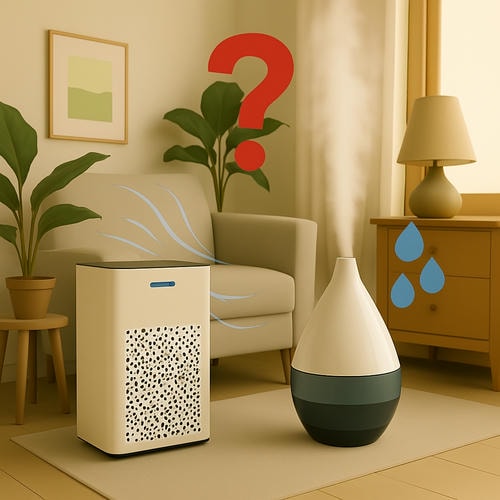
When it comes to improving your home’s air quality, air purifiers and humidifiers are two of the most popular devices people turn to. While both can help create a healthier indoor environment, they serve very different purposes.
Understanding the significance of air quality in our homes has become increasingly important, especially as we spend more time indoors. Poor air quality can lead to a range of health issues, including respiratory problems, allergies, and even long-term conditions such as asthma. This is why many homeowners are considering solutions like air purifiers and humidifiers to create a healthier living environment.
Both air purifiers and humidifiers can play essential roles in maintaining a comfortable and healthy home. While they may seem similar, the differences in their functions and benefits can significantly impact your indoor air quality. In this comprehensive guide, we will delve deeper into the workings of each device, their specific advantages, and how they can complement each other in your home.
In this post, we’ll break down the key differences between air purifiers and humidifiers, explain how they work, and help you decide which one (or both) might be right for your home.
Air purifiers have gained popularity not only for their ability to filter out harmful particles but also for their role in reducing odors and improving overall air freshness. By eliminating pollutants, these devices create a more pleasant environment, which can enhance your daily living experience. Many models now come equipped with advanced features such as smart technology, allowing users to monitor air quality in real time and adjust settings accordingly.
Let’s explore some common sources of indoor air pollution. Household dust is often composed of pet dander, skin cells, and other microscopic particles. Pollens can enter your home through open windows and doors, especially during peak allergy seasons. Mold can thrive in damp areas of your home, such as bathrooms, and smoke from cooking or tobacco can linger in the air. Understanding these sources can help in making informed decisions about which air purification techniques to implement.
What Is an Air Purifier?
An air purifier’s job is simple: clean the air.
It removes pollutants and allergens such as:
- Dust
- Pollen
- Mold spores
- Pet dander
- Smoke
- Bacteria and viruses
How it works:
Air purifiers pull air through filters—like HEPA filters or activated carbon filters—to trap and remove unwanted particles. Some purifiers use ionization technology, which charges particles so they stick to a collection plate or surfaces.
💡 Important: Air purifiers do not add moisture to the air.
Best for:
- People with asthma or allergies
- Homes with pets or smokers
- Anyone concerned about airborne viruses or indoor pollution
Products not fetched from DB and/or API. Please check debug logs.
💧 What Is a Humidifier?
A humidifier, on the other hand, doesn’t clean the air—it adds moisture to it.
How it works:
Depending on the type, a humidifier releases water vapor into the air in different ways:
- Ultrasonic: Uses vibrations to create a cool mist
- Evaporative: A fan blows air through a wet filter
- Steam: Boils water into warm mist
- Impeller: Uses a rotating disk to produce mist
Adding moisture is especially helpful in dry environments or during cold winter months when indoor air gets uncomfortably dry.
Best for:
When considering a humidifier, various types are available. For instance, ultrasonic humidifiers use high-frequency sound waves to produce a fine mist, while steam vaporizers boil water to create steam before cooling it down to a comfortable temperature. It’s essential to choose a type that fits your needs and preferences, and also to consider factors such as ease of cleaning and capacity to avoid issues like mold or bacteria growth in the unit.
- Dry skin, eyes, and sinuses
- Cold and flu relief
- Preventing dryness in babies and young children
Products not fetched from DB and/or API. Please check debug logs.
🔍 Key Differences at a Glance
⚠️ Considerations When Choosing Devices
When selecting either an air purifier or a humidifier, there are a few key factors to keep in mind:
- Size of the room: Ensure the device is suitable for the space.
- Maintenance requirements: Consider how often filters need to be replaced or how frequently the unit needs to be cleaned.
- Noise levels: Some devices can be quite loud, so consider this if you’re using them in a bedroom.
- Energy efficiency: Look for energy-efficient models to save on utility bills.
Humidifiers, while not purifying the air, are essential in maintaining an optimal humidity level, which can protect against a host of health problems. Dry indoor air can lead to skin irritation, chapped lips, and respiratory issues. By using a humidifier, you’re not only making your living environment more comfortable but also potentially preventing illnesses related to dry air. It’s important to note that maintaining the right humidity level—ideally between 30% and 50%—is crucial for both health and comfort.
Understanding how air purifiers and humidifiers work together can give you a comprehensive approach to improving your home’s air quality. For instance, during winter months when air is typically drier, a humidifier can prevent discomfort caused by dry air, while an air purifier can remove any allergens that may persist despite the humidity. This dual approach ensures that your living space remains both comfortable and healthy.
Ultimately, the decision to use an air purifier, a humidifier, or both depends on your specific needs. If you suffer from allergies or asthma, an air purifier will be beneficial. Conversely, if you often experience dry skin or respiratory discomfort during the winter, a humidifier may be the solution. Many people find that using both devices in tandem provides the best overall results for their home environment.